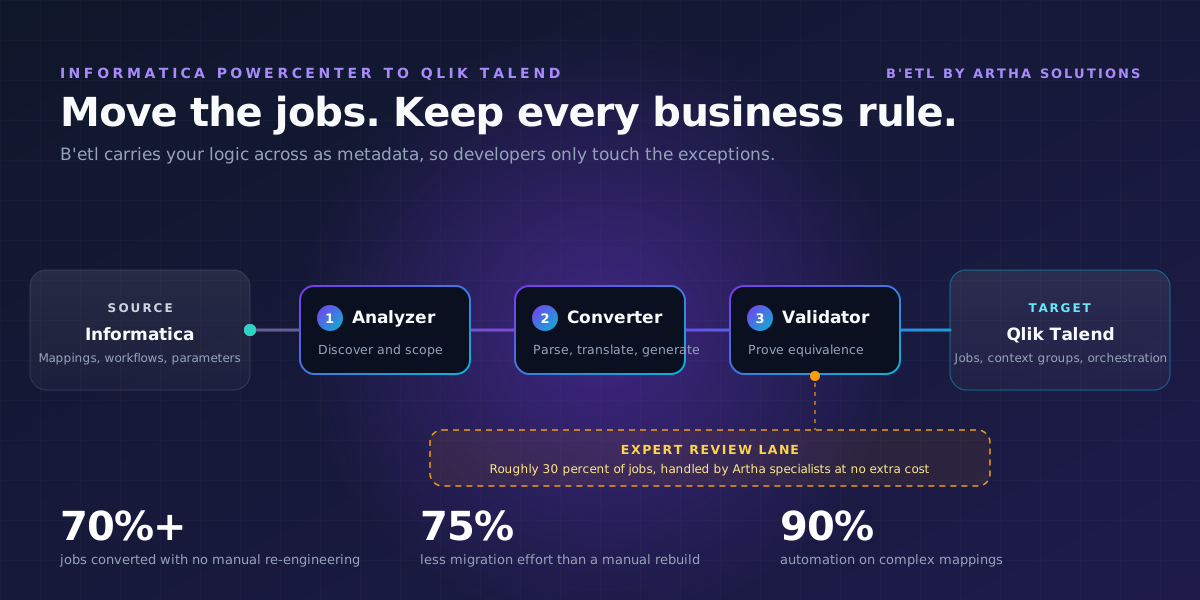
B’etl Analyzer
Repository inventory, job discovery, component analysis, dependency mapping, complexity classification, unsupported-pattern identification, sizing and wave planning.
B’ETL™ MIGRATION CENTER
Move from aging, expensive or difficult-to-maintain integration platforms to a modern Qlik and Talend architecture without treating migration as a blind code-conversion exercise.
Artha’s B’etl™-enabled migration factory combines automated analysis and conversion with architecture rationalization, reconciliation, testing and controlled production transition.
AI OVERVIEW
Artha Solutions provides legacy ETL migration services for Informatica PowerCenter, IBM DataStage, Microsoft SSIS, Pentaho, iWay, legacy Talend and custom frameworks. B’etl™ supports inventory, dependency analysis, complexity classification, conversion and wave planning with human-led architecture and validation.
Years of integration development create embedded dependencies, undocumented rules, duplicate jobs, operational workarounds and tightly coupled schedules. The rule that excludes a particular customer type from a revenue figure is usually a condition inside a transformation, added years ago for a reason nobody recorded. Convert the job faithfully and the rule survives; redesign it without knowing the rule exists and a number changes quietly at month end.
This is why the assessment comes before the target decision. A code-conversion exercise that starts without an inventory is buying the same estate again in newer syntax, including the jobs that should have been retired.
Licensing, aging estates and cloud modernization.
Mappings, workflows, reusable objects, parameter files and custom transformations.
Repositories, lineage, dependencies, component compatibility and wave sizing.
Qlik Talend Cloud, modern Talend, cloud ELT or hybrid integration.
Mapping outputs, schedules, restart behavior and performance.
Platform consolidation, skills risk and infrastructure modernization.
Parallel jobs, sequences, stages, shared containers and runtime behavior.
Job graph, dependencies, stages, parameters and unsupported patterns.
Qlik and Talend patterns selected by workload.
Row-level reconciliation, sequencing and throughput.
SQL Server modernization and movement toward cloud data platforms.
Packages, control flow, script tasks, configurations and scheduling.
Package inventory, tasks, connections, expressions and dependencies.
Qlik Talend Cloud, cloud ELT, APIs or retained SQL patterns.
Package behavior, data types, errors and SQL-side logic.
Support posture, standardization and platform consolidation.
Transformations, jobs, plugins, variables and custom steps.
Repositories, steps, hops, scheduling and plugin use.
Modern integration, data products or lakehouse pipelines.
Transformation results, orchestration and operational controls.
Key-person risk, limited observability and architecture simplification.
Custom adapters, scripts, undocumented logic and external schedulers.
Code and configuration inventory, interfaces, dependencies and runtime evidence.
API-led, event-driven, batch, CDC or hybrid patterns.
Business-rule review, integration testing and controlled cutover.
Version risk, cloud transition and operating-cost reduction.
Custom components, joblets, contexts, ESB, MDM and deployment practices.
Jobs, components, dependencies, runtime behavior and reuse.
Upgrade, standardize, Qlik Talend Cloud, retain or retire.
Regression, performance, deployment and recovery behavior.
Repository inventory, job discovery, component analysis, dependency mapping, complexity classification, unsupported-pattern identification, sizing and wave planning.
Supported mapping translation, reusable conversion patterns, target-code generation, configuration mapping, logging patterns and conversion reporting.
Architecture rationalization, business-rule review, manual remediation, reconciliation, performance and security testing, cutover and production transition.
Inventory every job, its schedule and what it touches, taken from the repository and from runtime evidence rather than from documentation. Jobs that have not executed in a year surface here, and they are often a quarter of the estate.
Score each workload on complexity, business criticality and target fit, and flag the near-duplicates. This is the stage that decides what is not worth migrating, which is the cheapest saving available in the whole programme.
Set the target patterns, naming and environment standards, then sequence the waves so the first one is genuinely low-risk and the dependencies within each wave are self-contained. Acceptance criteria are agreed before conversion starts, not negotiated during validation.
Automate the patterns that translate reliably and route the rest to remediation, tracked as a named exception rather than absorbed silently. Custom components and script tasks are almost always in that second group.
Row-count and value reconciliation between old and new for the same input, plus exception paths, performance under production volume, restart behaviour and security. Matching row counts on a happy-path test is the most common false confidence in ETL migration.
Release by wave with a rehearsed cutover, parallel running where criticality justifies the cost, and a rollback that has been tested rather than described. Post-release verification is on the business output, not on job status.
Decommission the legacy jobs the new ones replaced, so licence and infrastructure savings are actually realised, and hand over runbooks to a team that has already worked an incident in the new platform.
The default for pipelines that need managed integration, transformation, quality and governance in one place, and for teams who would rather not maintain integration servers themselves.
Where data residency, network isolation or an existing operations capability makes client-managed the right call. Standardised patterns, current version, no runtime you cannot place where compliance requires.
When the warehouse or lakehouse is already the compute you are paying for. Pushing transformation down to it avoids moving large volumes twice, and suits set-based logic more than row-by-row rules.
High-volume analytical and historical data where storage cost dominates and several engines need to read the same tables. Apache Iceberg pipelines, described in more detail on the Open Lakehouse page.
Operational exchange between applications, where the requirement is a request answered in real time rather than a batch delivered on schedule. Frequently what a legacy ETL job was doing badly all along.
The honest answer for most large estates. Latency, regulation, licence economics and available skills rarely point at one destination, so the target is a deliberate combination with a documented rule for which workload goes where.
The migration factory creates evidence and production assets, not only converted code.
CUSTOMER EVIDENCE
Selected from Artha’s existing published case-study system. Customer anonymization is preserved.
Challenge: Inventory and logistics events took more than 24 hours to reach executive reporting, limiting hot-order visibility and increasing operational intervention.
Artha solution: Artha implemented Qlik Replicate change data capture, Qlik Compose modeling and a governed cloud analytics pipeline.
Qlik Cloud, Qlik Replicate, Qlik Compose, Snowflake, Microsoft Azure, Azure, Qlik
Challenge: A manufacturing and construction enterprise needed to integrate SAP S/4HANA with decades of ERP history and a wider operational application landscape.
Artha solution: Artha used Talend, AWS and Snowflake to create a scalable integration and historical-data foundation for the modernization program.
Talend, AWS, Snowflake, Salesforce, SAP, MuleSoft
Challenge: Under-resourced Talend environments, hard-coded settings and limited monitoring constrained development, testing and cloud readiness.
Artha solution: Artha improved runtime configuration, reusable engineering patterns, environment controls and operational monitoring.
Talend
RELATED RESOURCES
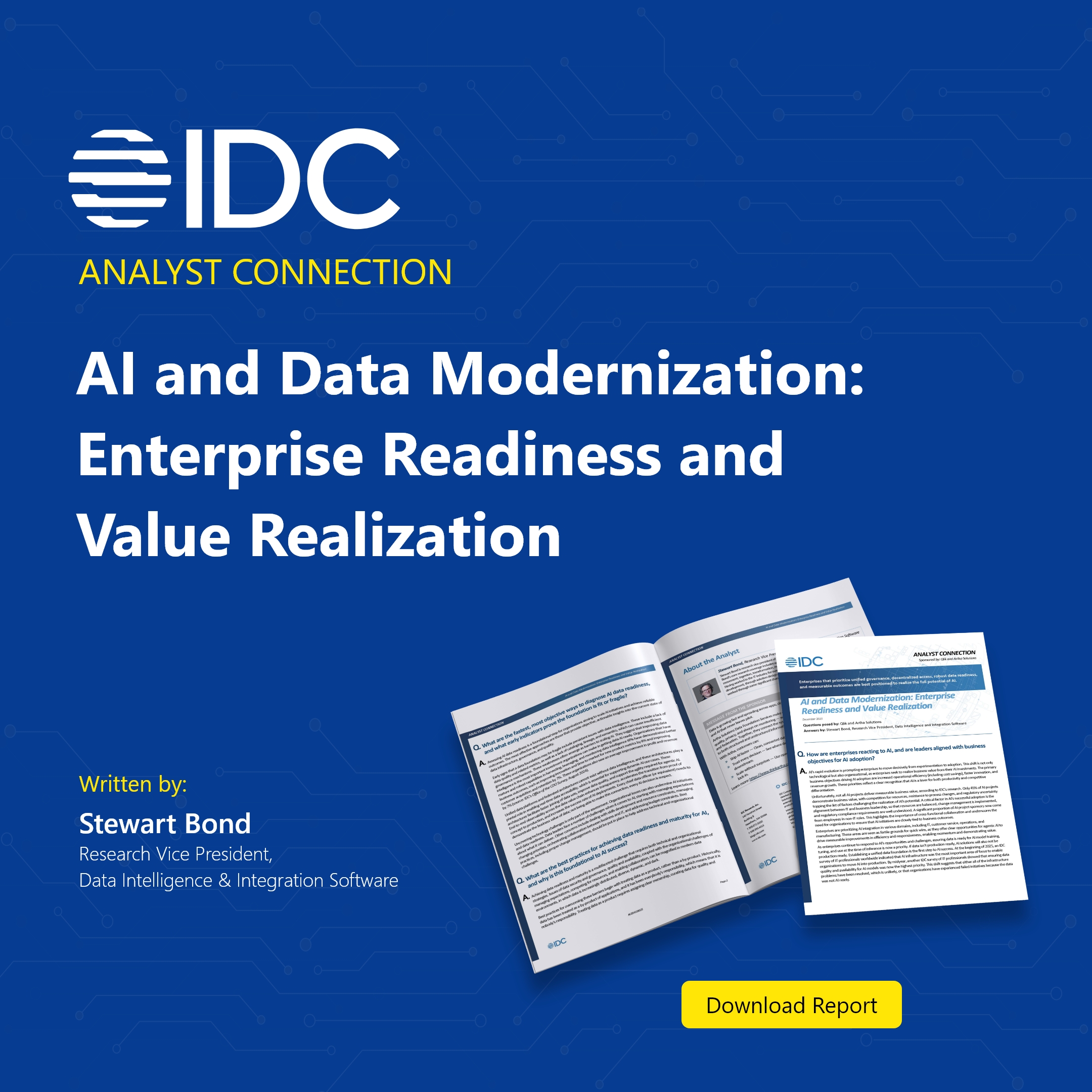
ANALYST CONNECTION Sponsored by: Qlik and Artha Solutions AI and Data Modernization: Enterprise Readiness and Value Realization December 2025 Questions posed by: Qlik and Artha Solutions Answers by: Stewart Bond.
Explore whitepaperSuccess with AI starts with data. Improving data quality and accessibility for AI is today’s top organizational priority; nine months ago, it was improving AI infrastructure. However, laying a solid data foundation for.
Explore whitepaperB'etl removes both problems by carrying Informatica business logic across to Talend as metadata, so more than 70 percent of jobs convert with nobody retyping a rule.
Explore articleCONNECTED QLIK MICROSITE
FREQUENTLY ASKED QUESTIONS
Concise answers based on current Qlik product information and Artha’s consulting approach.
B’etl™ is Artha’s migration accelerator for analyzing legacy ETL estates and automating suitable conversion work. It supports inventory, dependency mapping, complexity classification, sizing, target-code generation and reporting while architects retain control of rationalization, exceptions and validation.
Artha can assess Informatica PowerCenter, IBM DataStage, Microsoft SSIS, Pentaho Data Integration, iWay, legacy Talend environments and custom ETL frameworks. Exact analysis depth depends on repository access, exports, custom components and runtime evidence.
Yes, suitable Informatica workloads can be modernized toward Qlik Talend Cloud. Artha first analyzes mappings, workflows, dependencies, transformations and operating behavior, then selects conversion, redesign, retention or retirement by workload.
No. Automation can accelerate inventory, classification and supported conversion patterns, but architecture decisions, business-rule interpretation, unsupported components, reconciliation, security and production cutover require human control.
Artha builds dependency and rule inventories, reviews critical transformations with business and technical owners, reconciles source and target outputs and maintains traceable acceptance evidence across migration waves.
Validation includes unit, integration, row-count and value reconciliation, exception-path, performance, security, scheduling, restart and production-readiness tests according to workload criticality.
Yes, when evidence and accountable owners confirm redundancy. Rationalization is a deliberate governance decision; jobs are not removed solely because automated analysis finds similarity.
Artha uses wave planning, environment controls, rehearsal, parallel validation where appropriate, cutover checklists, rollback provisions, monitoring and post-release verification.
Yes. Suitable analytical workloads may target Qlik Open Lakehouse and Apache Iceberg. Workload fit depends on freshness, transformations, query patterns, AWS architecture, governance and operating responsibilities.
The assessment normally includes repository inventory, dependency mapping, complexity and risk classification, rationalization opportunities, target options, migration sizing, wave recommendations and a scoped validation approach.
NEXT STEP
Begin with evidence about workload size, dependencies, business criticality and target fit.