Master Data Management in Manufacturing: Powering AI, SAP, and PLM Integration

In today’s manufacturing world, data is the new raw material. From IoT sensors on the shop floor to CAD models in engineering systems, enterprises are drowning in information. Yet, many still struggle with inconsistent records, siloed systems, and the inefficiencies that follow. Master Data Management (MDM), powered by AI and deeply integrated with SAP and Product Lifecycle Management (PLM) systems, offers the way forward. 

MDM: The Backbone of Manufacturing Data 

At its core, MDM ensures that critical business entities materials, products, suppliers, customers are defined, structured, and maintained consistently across systems. In manufacturing, this means maintaining clean material masters, harmonized product hierarchies, and accurate supplier data. 

Without this foundation, organizations face problems like duplicate part numbers, misaligned bills of materials (BOMs), and delays in order fulfilment. Sales teams struggle to generate accurate quotes, engineering teams waste time searching for the right specifications, and procurement deals with mismatched supplier information. 

MDM acts as the single source of truth, enabling every function engineering, supply chain, sales, and finance to work with the same accurate data. 

Governance: Turning Data into an Enterprise Asset 

MDM success requires strong governance. This isn’t just about setting rules it’s about creating accountability. A governance framework should include: 

  • Leadership alignment to ensure data initiatives support broader business transformation. 
  • Dedicated roles such as data owners, domain stewards, and a data management office. 
  • Metrics that matter, such as reduction in quote cycle times, fewer BOM errors, and increased data reuse across use cases. 

When governance is built into digital initiatives like an SAP S/4HANA migration or a PLM rollout it delivers more than compliance. It turns data into a measurable driver of business value. 

Clearing Data Roadblocks with AI 

The biggest obstacle to leveraging advanced analytics and automation in manufacturing isn’t a lack of AI models it’s poor data quality. Duplicate records, missing attributes, and inconsistent standards undermine even the most sophisticated tools. 

AI now plays a central role in solving this challenge. Modern platforms can: 

  • Detect duplicates across millions of records. 
  • Resolve entities by matching attributes like supplier codes, part descriptions, or drawings. 
  • Flag anomalies in real time, ensuring bad data doesn’t cascade into downstream processes. 
  • Automate cleansing and enrichment, reducing dependency on manual intervention. 

By deploying AI-powered “data-quality SWAT teams” and industrialized monitoring systems, manufacturers can continuously cleanse, validate, and enrich their master data turning quality into a competitive advantage. 

AI Beyond Text: Learning from Images and 3D Models 

One of the most exciting frontiers in MDM is using AI to derive structured insights from unstructured assets images, CAD files, and 3D drawings. 

Imagine a system that: 

  • Scans 3D CAD models to automatically identify material specifications. 
  • Extracts features from engineering drawings, tagging parts with attributes like size, weight, and finish. 
  • Recognizes duplicate designs, helping reduce redundant parts and costs. 
  • Auto-generates material master’s by reading images and linking them with metadata. 

This transforms the way manufacturers create and maintain material masters. Instead of relying on error-prone manual entry, AI can generate accurate, metadata-rich records directly from engineering assets. 

The impact is profound: streamlined material master creation, faster BOM generation, and better alignment between engineering (PLM) and operations (SAP). 

The Power of SAP and PLM Integration 

Manufacturers typically operate with multiple core systems: 

  • SAP ERP for procurement, production planning, and financials. 
  • PLM systems for managing design lifecycles, CAD models, and engineering changes. 
  • MES and legacy systems on the shop floor. 

The challenge is reconciling data between these systems. Without MDM, mismatches are common engineering may define a part one way in PLM, while procurement sees a different description in SAP. 

MDM provides the harmonized layer between PLM and ERP: 

  1. Golden Record Creation: Establishes a unified version of each product or material, reconciling attributes across PLM, SAP, and suppliers. 
  2. Data Flow Synchronization: Ensures BOMs, material specs, and lifecycle statuses remain consistent across systems. 
  3. AI-Driven Mapping: Automatically links attributes from CAD and PLM to SAP material masters, flagging duplicates or inconsistencies. 

This alignment directly impacts business performance. Quotes are generated faster, BOMs are accurate, and procurement can trust the specifications they source. 

MDM as a Data Product 

Rather than treating data as a static asset, leading manufacturers are embracing the concept of data as a product. In this model, MDM is packaged into reusable “data products” that serve multiple functions. 

For example: 

  • A material master data product supports quote generation, procurement sourcing, and inventory optimization simultaneously. 
  • A supplier data product helps both compliance teams (for audits) and sourcing teams (for negotiations). 

AI accelerates this by enabling faster creation and enrichment of these data products. Instead of months of manual curation, AI can build and maintain them at scale. 


A Practical Roadmap for Manufacturers 

Building a successful MDM program in manufacturing requires more than technology it needs a holistic approach. 

Step 1: Establish Governance Foundations
Define ownership, create a data council, and align with business transformation agendas (SAP upgrades, PLM rollouts). 

Step 2: Deploy AI-Powered Quality Engines
Set up automated pipelines for cleansing, enrichment, and anomaly detection. 

Step 3: Automate Material Master Creation
Use AI to extract specifications from drawings, images, and documents to populate MDM. 

Step 4: Treat MDM as a Product
Develop reusable data products with clear ownership, usage metrics, and ROI tracking. 

Step 5: Integrate SAP and PLM
Ensure seamless synchronization between design data and operational data. 

Step 6: Measure Value
Track improvements in quote cycle times, supplier onboarding speed, and error reduction in production. 


Tangible Business Outcomes 

When executed well, MDM in manufacturing delivers measurable results: 

  • Quote turnaround reduced by days or weeks, thanks to AI-powered material master availability. 
  • Improved accuracy in BOMs and purchase orders, reducing rework and scrap. 
  • Lower costs through elimination of duplicate parts and better supplier visibility. 
  • Faster innovation cycles, as engineering can focus on design rather than data wrangling. 
  • Compliance by design, with clean, standardized records supporting audits and regulations. 

Ultimately, MDM creates the data foundation that enables Industry 4.0 technologies digital twins, predictive analytics, and AI-driven automation to thrive. 


Conclusion 

In manufacturing, MDM is no longer a back-office exercise—it is a strategic enabler of growth. By combining AI’s ability to learn from images and 3D drawings with robust governance, and by integrating SAP and PLM into a unified data backbone, manufacturers can transform how they operate. 

The result is faster quotes, cleaner supply chains, more resilient operations, and a smarter path to Industry 4.0. 

For manufacturers seeking to compete in an increasingly digital world, investing in AI-powered MDM is not optional it is the key to unlocking sustainable advantage.

Data Modernization Strategies for SAP in Manufacturing

Why lineage and reconciliation are non-negotiable for S/4HANA migrations 

Modern manufacturers are racing to modernize their SAP estates—moving from ECC to S/4HANA, consolidating global instances, and connecting PLM, MES, and IIoT data into a governed lakehouse. Most programs invest heavily in infrastructure, code remediation, and interface rewiring. Yet the single biggest determinant of success is data: whether migrated data is complete, correct, and traceable on day one and into the future. As McKinsey often highlights, value capture stalls when data foundations are weak; Gartner and IDC likewise emphasize lineage and reconciliation as critical controls in digital core transformations. This blog lays out a pragmatic, technical playbook for SAP data modernization in manufacturing—anchored on post-migration data lineage and data reconciliation, with a deep dive into how Artha’s Data Insights Platform (DIP) operationalizes both to eliminate data loss and accelerate benefits realization.


The reality of SAP data in manufacturing: complex, connected, consequential 

Manufacturing master and transactional data is unusually intricate: 

  • Material master variants, classification, units of measure, batch/serial tracking, inspection characteristics, and engineering change management. 
  • Production and quality data across routings, work centers, BOMs (including alternate BOMs and effectivity), inspection lots, and MICs. 
  • Logistics across EWM/WM, storage types/bins, handling units, transportation units, and ATP rules. 
  • Finance and controlling including material ledger activation, standard vs. actual costing, WIP/variances, COPA characteristics, and parallel ledgers. 
  • Traceability spanning PLM (e.g., Teamcenter, Windchill), MES (SAP MII/DMC and third-party), LIMS, historians, and ATTP for serialization. 

When you migrate or modernize, even small breaks in mapping, code pages, or value sets ripple into stock valuation errors, MRP explosions, ATP mis-promises, serial/batch traceability gaps, and P&L distortions. That’s why data lineage and reconciliation must be designed as first-class architecture—not as go-live fire drills. 

Where data loss really happens (and why you often don’t see it until it’s too late) 

“Data loss” isn’t just a missing table. In real projects, it’s subtle: 

  • Silent truncation or overflow: field length differences (e.g., MATNR, LIFNR, CHAR fields), numeric precision, or time zone conversions. 
  • Unit and currency inconsistencies: base UoM vs. alternate UoM mappings; currency type mis-alignment across ledgers and controlling areas. 
  • Code and value-set drift: inspection codes, batch status, reason codes, movement types, or custom domain values not fully mapped. 
  • Referential integrity breaks: missing material-plant views, storage-location assignments, batch master without corresponding classification, or routing steps pointing to non-existent work centers. 
  • Delta gaps: SLT/batch ETL window misses during prolonged cutovers; IDocs stuck/reprocessed without full audit. 
  • Historical scope decisions: partial history that undermines ML, warranty analytics, and genealogy (e.g., only open POs migrated, but analytics requires 24 months). 

You rarely catch these with basic row counts. You need recon at business meaning (valuation parity, stock by batch, WIP aging, COPA totals by characteristic) plus technical lineage to pinpoint exactly where and why a value diverged. 


Data lineage after migration: make “how” and “why” inspectable 

Post-migration, functional tests confirm that transactions post and reports run. But lineage answers the deeper questions: 

  • Where did this value originate? (ECC table/field, IDoc segment, BAPI parameter, SLT topic, ETL job, CDS view) 
  • What transformations occurred? (UoM conversions, domain mappings, currency conversions, enrichment rules, defaulting logic) 
  • Who/what changed it and when? (job name, transport/package, Git commit, runtime instance, user/service principal) 
  • Which downstream objects depend on it? (MRP lists, inspection plans, FIORI apps, analytics cubes, external compliance feeds) 

With lineage, you can isolate the root cause of valuation mismatches (“conversion rule X applied only to plant 1000”), prove regulatory traceability (e.g., ATTP serials), and accelerate hypercare resolution. 


Data reconciliation: beyond counts to business-truth parity 

Effective reconciliation is layered: 

  1. Structural: table- and record-level counts, key coverage, null checks, referential constraints. 
  1. Semantic: code/value normalization checks (e.g., MIC codes, inspection statuses, movement types). 
  1. Business parity: 
  • Inventory: quantity and value by material/plant/sloc/batch/serial; valuation class, price control, ML actuals; HU/bin parity in EWM. 
  • Production: WIP balances, variance buckets, open/closed orders, confirmations by status. 
  • Quality: inspection lots by status/MIC results, usage decisions parity. 
  • Finance/CO: subledger to GL tie-outs, COPA totals by characteristic, FX revaluation parity. 
  • Order-to-Cash / Procure-to-Pay: open items, deliveries, GR/IR, price conditions alignment. 

Recon must be repeatable (multiple dress rehearsals), explainable (drill-through to exceptions), and automatable(overnight runs with dashboards) so that hypercare doesn’t drown in spreadsheets. 


A reference data-modernization architecture for SAP 

Ingestion & Change Data Capture 

  • SLT/ODP for near-real-time deltas; IDoc/BAPI for structured movements; batch extraction for history. 
  • Hardened staging with checksum manifests and late-arriving delta handling. 

Normalization & Governance 

  • Metadata registry for SAP objects (MATNR, MARA/MARC, EWM, PP, QM, FI/CO) plus non-SAP (PLM, MES, LIMS). 
  • Terminology/value mapping services for UoM/currency/code sets. 

Lineage & Observability 

  • End-to-end job graph: source extraction transformation steps targets (S/4 tables, CDS views, BW/4HANA, lakehouse). 
  • Policy-as-code controls for PII, export restrictions, and data retention. 

Reconciliation Services 

  • Rule library for business-parity checks; templated SAP “packs” (inventory, ML valuation, COPA, WIP, ATTP serial parity). 
  • Exception store with workflow to assign, fix, and re-test. 

Access & Experience 

  • Fiori tiles and dashboards for functional owners; APIs for DevOps and audit; alerts for drifts and SLA breaches. 


How Artha’s Data Insights Platform (DIP) makes this operational 

Artha DIP is engineered for SAP modernization programs where lineage and reconciliation must be continuous, auditable, and fast. 

  1. a) End-to-end lineage mapping
  • Auto-discovery of flows from ECC/S/4 tables, IDoc segments, and CDS views through ETL/ELT jobs (e.g., Talend/Qlik pipelines) into the target S/4 and analytics layers. 
  • Transformation introspection that captures UoM/currency conversions, domain/code mappings, and enrichment logic, storing each step as first-class metadata. 
  • Impact analysis showing which BOMs, routings, inspection plans, or FI reports will be affected if a mapping changes. 
  1. b) Industrialized reconciliation
  • Pre-built SAP recon packs: 
  • Inventory: quantity/value parity by material/plant/sloc/batch/serial, HU/bin checks for EWM, valuation and ML equivalents. 
  • Manufacturing: WIP, variance, open orders, confirmations, partial goods movements consistency. 
  • Quality: inspection lots and results parity, UD alignment, MIC coverage. 
  • Finance/CO: GL tie-outs, open items, COPA characteristic totals, FX reval parity. 
  • Templated “cutover runs” with sign-off snapshots so each dress rehearsal is comparable and auditable. 
  • Exception explainability: every failed check links to lineage so teams see where and why a discrepancy arose. 
  1. c) Guardrails against data loss
  • Schema drift monitors: detect field length/precision mismatches that cause silent truncation. 
  • Unit/currency harmonization: rules to validate and convert UoM and currency consistently; alerts on out-of-range transformations. 
  • Delta completeness: window-gap detection for SLT/ODP so late arrivals are reconciled before sign-off. 
  1. d) Governance, security, and audit
  • Role-based access aligned to functional domains (PP/QM/EWM/FIN/CO). 
  • Immutable recon evidence: timestamped results, user approvals, and remediation histories for internal/external audit. 
  • APIs & DevOps hooks: promote recon rule sets with transports; integrate with CI/CD so lineage and recon are part of release gates. 

Program playbook: where lineage and recon fit in the migration lifecycle 

  1. Mobilize & blueprint 
  • Define critical data objects, history scope, and parity targets by process (e.g., “inventory value parity by valuation area ±0.1%”). 
  • Onboard DIP connectors; enable auto-lineage capture for existing ETL/IDoc flows. 
  1. Design & build 
  • Author mappings for material master, BOM/routings, inspection catalogs, and valuation rules; store transformations as managed metadata. 
  • Build recon rules per domain (inventory, ML, COPA, WIP) with DIP templates. 
  1. Dress rehearsals (multiple) 
  • Execute end-to-end loads; run DIP recon packs; triage exceptions via lineage drill-down. 
  • Track trend of exception counts/time-to-resolution; harden SLT/ODP windows. 
  1. Cutover & hypercare 
  • Freeze mappings; run final recon; issue sign-off pack to Finance, Supply Chain, and Quality leads. 
  • Keep DIP monitors active for 4–8 weeks to catch late deltas and stabilization issues. 
  1. Steady state 
  • Move from “migration recon” to continuous observability—lineage and parity checks run nightly; alerts raised before business impact. 

Manufacturing-specific traps and how DIP handles them 

  • Material ledger activation: value flow differences between ECC and S/4—DIP parity rules compare price differences, CKML layers, and revaluation postings to ensure the same economics. 
  • EWM bin/HU parity: physical vs. logical stock; DIP checks HU/bin balances and catch cases where packaging spec changes caused mis-mappings. 
  • Variant configuration & classification: inconsistent characteristics lead to planning errors; DIP validates VC dependency coverage and classification value propagation. 
  • QM inspection catalogs/MICs: code group and MIC mismatches cause UD issues; DIP checks catalog completeness and inspection result parity. 
  • ATTP serialization: end-to-end serial traceability across batches and shipping events; DIP lineage shows serial journey to satisfy regulatory queries. 
  • Time-zone and calendar shifts (MES/DMC vs. SAP): DIP normalizes timestamps and flags sequence conflicts affecting confirmations and backflush. 


KPIs and acceptance criteria: make “done” measurable 

  • Lineage coverage: % of mapped objects with full source-to-target lineage; % of transformations documented. 
  • Recon accuracy: parity rates by domain (inventory Q/V, WIP, COPA, open items); allowed tolerance thresholds met. 
  • Delta completeness: % of expected records in each cutover window; number of late-arriving deltas auto-reconciled. 
  • Data loss risk: # of truncation/precision exceptions; UoM/currency conversion anomaly rate. 
  • Time to resolution: mean time from recon failure root cause (via lineage) fix green rerun. 
  • Audit readiness: number of signed recon packs with immutable evidence. 


How this reduces project risk and accelerates value 

  • Shorter hypercare: lineage-driven root cause analysis cuts triage time from days to hours. 
  • Fewer business outages: parity checks prevent stock/valuation shocks that freeze shipping or stop production. 
  • Faster analytics readiness: clean, reconciled S/4 and lakehouse data enables advanced planning, warranty analytics, and predictive quality sooner. 
  • Regulatory confidence: serial/batch genealogy and financial tie-outs withstand scrutiny without war rooms. 


Closing: Impact on business functions and the bottom line—through better care for your data 

  • Finance & Controlling benefits from trustworthy, reconciled ledgers and COPA totals. This means clean month-end close, fewer manual adjustments, and reliable margin insights—directly reducing the cost of finance and improving forecast accuracy. 
  • Supply Chain & Manufacturing gain stable MRP, accurate ATP, and correct stock by batch/serial and HU/bin—cutting expedites, write-offs, and line stoppages while improving service levels. 
  • Quality & Compliance see end-to-end traceability across inspection results and serialization, enabling faster recalls, fewer non-conformances, and audit-ready evidence. 
  • Engineering & PLM can trust BOM/routing and change histories, raising first-time-right for NPI and reducing ECO churn. 
  • Data & Analytics teams inherit a governed, well-documented dataset with lineage, enabling faster model deployment and better decision support. 

As McKinsey notes, the biggest wins from digital core modernization come from usable, governed data; Gartner and IDC reinforce that lineage and reconciliation are the control points that keep programs on-budget and on-value. Artha’s DIP operationalizes those controls—eliminating data loss, automating reconciliation, and making transformation steps explainable. The result is a smoother migration, a shorter path to business benefits, and a durable foundation for advanced manufacturing—delivering higher service levels, lower operating cost, and better margins because your enterprise finally trusts its SAP data. 


AI-Powered Production Optimization: The Future of Manufacturing

Manufacturing is entering a new era where artificial intelligence (AI) and machine learning are taking central stage to gain maximum productivity. CIOs in the manufacturing sector are excited by visions of predictive maintenance, AI optimizers tweaking processes, and autonomous systems driving efficiency gains. The strategic key to turning this vision into reality, however, lies beneath the surface: data infrastructure and governance must be rock-solid before Day Zero of any AI deployment.

In practice, that means laying a foundation of high-quality, integrated, and well-governed data even before an AI project kicks off. Skipping this groundwork can spell trouble – industry research shows that many AI initiatives falter due to data issues, not algorithm flaw.1,2  This narrative will explore how preparing data from the outset enables AI-powered production optimization to deliver on its promise, and how Artha Data Solutions is helping manufacturers bridge IT/OT divides and unlock competitive advantages through ready-to-use, reliable data.


The Promise of AI in Manufacturing and the Data Dilemma

The potential of AI in manufacturing is no more a buzzword. From AI-driven process control that continuously tunes equipment for optimal performance, to machine learning models that predict quality issues or maintenance needs, the rewards include higher throughput, lower costs, and improved quality. For example, a Tier 2 automotive supplier doubled the throughput of a production line with an AI-based system that identified bottlenecks in real time.3 In heavy industries like cement and chemicals, AI optimizers have demonstrated double-digit performance improvements without new hardware – boosting yield and energy efficiency in mere months.4,5 Clearly, AI can be transformative on the factory floor.


Yet, these gains are only achievable if the underlying data is trustworthy and accessible. In fact, lack of data readiness is one of the biggest roadblocks for AI in manufacturing. Surveys show up to 80% of AI projects fail to move beyond pilot stages, with poor data quality and siloed data infrastructure often to blame.6,7 Gartner analysts predict that at least 30% of AI projects will be abandoned at proof-of-concept by 2025 due to issues like subpar data quality and inadequate data governance.1 The message is clear: no matter how advanced the AI, it cannot fix fragmented or dirty data. As one expert aptly put it, “As soon as you think you are ready to adopt AI technology, pause and evaluate your data’s quality, structure and volume”.8 Before algorithms start optimizing anything, CIOs must ensure their house is in order – data from across the plant and enterprise must be clean, consistent, and unified.


Before Day Zero: Building the Data Foundation for AI

Day Zero refers to the moment an AI initiative formally begins – but the real work should start well before that. Laying a strong data foundation involves multiple strategic steps:


  1. Data Audit and Cleaning: Begin with a thorough audit of existing data sources (sensor streams, production logs, MES/ERP databases, etc.). Identify errors, gaps, and inconsistencies. It’s crucial


to fix data quality issues upfront – AI models are infamous for “garbage in, garbage out.” By cleansing and standardizing data early, manufacturers avoid feeding AI systems with misleading information. For AI systems to function optimally, the data must be clean, consistent, and error-free. This includes aligning units, timestamps, and definitions across sources.9


  1. Integration of Siloed Systems (IT/OT Convergence): Most factories have a split between operational technology (OT) on the shop floor and information technology (IT) in business Bridging this divide is essential. Integrating real-time machine data with enterprise data gives AI a holistic view of operations. In fact, 56% of manufacturers cite lack of data integration as a major barrier to digital transformation.10 An integrated data architecture (data lakes, IIoT platforms, or unified databases) should be established so that all relevant data – from PLC sensors to quality labs to inventory systems – flows into a common ecosystem. This IT/ OT convergence “creates a unified platform for data exchange and analysis”, empowering real-time production insights and resource optimization.11 Manufacturers that connect their disparate systems can monitor equipment performance in context, correlate process parameters with yield, and enable AI to uncover patterns spanning the entire production value chain.


  1. Data Governance and Master Data Management: Preparing data isn’t just a technical exercise; it’s also organizational. Companies need to institute data governance policies and roles to manage data as a strategic asset. This means defining data ownership (who is responsible for which data sets), setting up data quality KPIs, and ensuring compliance with standards (for example, calibration schedules for sensors or version control for control logic data). It also means creating master data definitions for key entities (products, materials, machine IDs, ) so that every system uses consistent terminology. Effective data governance underpins trust in data-driven decisions. As Artha Solutions emphasizes, “effective data governance and analytics help [manufacturers] make informed decisions, optimize supply chains, and drive innovation”.12 Governance ensures the AI initiative has well-defined, reliable data to learn from, and that any insights can be traced back to quality-controlled sources.


  1. Infrastructure and Architecture Readiness: Before deploying AI, CIOs should evaluate whether their data infrastructure can support the scale and speed required. AI for production optimization often involves streaming data (from IoT sensors or machines) and heavy computations. A modern, scalable architecture – whether cloud-based, on-premises, or hybrid – with proper data pipelines is critical. This might include establishing a data lake or warehouse that aggregates OT and IT data, deploying edge computing for low-latency processing on the shop floor, and setting up APIs or middleware to connect legacy systems. Security is also paramount: ensure a robust framework (even zero-trust architectures) to protect sensitive production data as it flows to AI systems. The goal is a resilient plumbing of data such that from Day Zero, data is continuously flowing from the factory floor to AI models and back to decision-makers, without bottlenecks or security gaps.


By addressing these areas before AI implementation begins, organizations set themselves up for success. They avoid the common pitfall of AI teams spending 80% of their time wrangling data and fighting quality issues after the project is underway. Instead, the AI team can focus on model development and analysis from Day One, because the data foundation is already in place. The payoff is dramatic: companies that put in the prep work have seen their AI projects deliver value faster and more smoothly than those that rushed in unprepared.2,7


Bridging IT and OT: The Key to Unified Insights

One aspect deserving special attention is IT/OT convergence – the blending of information technology systems with operational technology systems. In many manufacturing environments, decades-old OT systems (SCADA, PLCs, DCS, historians) run the production processes, while modern IT systems (ERP, MES, QMS, etc.) manage business processes. AI-powered optimization demands that these layers talk to each other. When IT and OT remain isolated, data vital to optimization is trapped in silos. For example, the maintenance department might have vibration sensor readings that never get correlated with production schedules from ERP, or quality measurements in a lab database that aren’t linked to the specific machine settings that produced those batches.


Bridging IT and OT unlocks real-time, end-to-end visibility. By connecting shop-floor sensors and control systems with enterprise data, CIOs can give AI models the full context needed to make intelligent decisions. The benefits of this unified data are tangible – manufacturers gain “real-time insights into production processes, optimize resource utilization, boost productivity through automation, and reduce operational costs” through IT/OT integration.11 Imagine an AI system that not only detects an anomaly in machine performance from sensor data, but also cross-references it with maintenance logs and inventory data to recommend a proactive fix and ensure spare parts are on hand. Without IT/OT integration, such holistic optimization is impossible.


Artha Data Solutions recognizes that bridging this gap is often the prerequisite of successful industrial AI. Artha specializes in data integration across the value chain, effectively linking factory floor devices with cloud analytics and enterprise apps. By deploying robust data management platforms, connectors, and IoT frameworks, Artha helps manufacturers create a single source of truth. In practice, this might involve streaming data pipelines that pull readings from PLCs on the line into a central data lake, where they are merged with MES production records and even contextual data like ambient conditions or operator shifts. The outcome is a rich dataset ready for AI consumption. Notably, manufacturers that centralize and analyze previously fragmented data can significantly improve production efficiency and quality – centralizing data improves throughput and quality while data governance ensures those insights drive smart decisions.12 Bridging IT/OT isn’t just an IT project; it’s a strategic initiative that yields a competitive edge by enabling AI to act on complete, timely information.


Accelerating AI Adoption with Artha Data Solutions

Establishing this data foundation can be complex, which is where experts like Artha Data Solutions come in. Artha’s vision is firmly grounded in the idea that AI success starts with data readiness. As the company puts it, “Your AI vision starts with the right foundation — your data”, and they offer intelligent data management solutions to ensure data is “AI-ready” for integration.13 In practical terms, Artha provides services and tools that cover the end-to-end preparation of data for AI:


  • Data Quality & Consistency: Artha’s data readiness framework includes rigorous data auditing, cleansing, and validation steps. They help manufacturing clients identify inconsistencies across datasets and rectify errors so that AI models can train on high-quality By ensuring clean, reliable data from the outset, Artha reduces the risk of AI models producing skewed or inaccurate results due to garbage data.8,14


  • Data Integration & Single Source of Truth: Artha specializes in integrating disparate data sources – whether from legacy systems, modern IoT sensors, or enterprise applications. Their expertise in master data management (MDM) and data lakes/cloud platforms allows companies to unify their information For a manufacturer, this means bridging systems


across the entire value chain: design, production, maintenance, supply chain, and distribution. The result is an integrated data backbone where AI applications can draw insights from every stage. As evidence of this approach, Artha helped a leading energy company aggregate and model data across domains, improving data quality and enabling optimized processes enterprise-wide.15 In manufacturing contexts, such integration can, for example, tie raw material quality data to production parameters to find optimal settings, or connect customer demand forecasts with factory scheduling to intelligently adjust throughput.


  • AI-Ready Governance & Compliance: Knowing that industrial data often spans various formats and may be subject to compliance (safety standards, regulatory reporting, etc.), Artha implements robust data governance frameworks tailored for This includes setting up data access controls, audit trails, and compliance checks before AI deployment. With Artha’s help, organizations put in place automated data monitoring and governance policies to maintain data integrity over time.16,17 This not only keeps the AI inputs reliable as new data streams in, but also ensures that scaling AI across multiple plants or lines meets both internal and external data regulations. Secure, governed data means AI projects won’t be derailed by privacy breaches or compliance issues down the road.


  • IT/OT Convergence Solutions: Crucially, Artha brings deep experience in bridging operational tech with enterprise IT. Through industrial connectivity solutions, they help capture real-time shop floor data (from sensors, machines, SCADA systems) and funnel it into analytics platforms. At the same time, they integrate relevant enterprise context (like production orders or inventory levels) so that AI models see the full picture. This IT/OT bridging is core to Artha’s value proposition – effectively, they act as the architects of the digital thread that connects equipment to analytics to business outcomes. With that thread in place, manufacturers can accelerate AI adoption because the data hurdles between operations and IT have been In one example, Artha’s integration of real-time data management allowed a client to monitor equipment health live and predict maintenance needs, reducing downtime and ensuring continuous production.18


The competitive advantages of partnering with Artha are evident. Companies get to leverage Artha’s proven methodologies and accelerators (such as their Data Insights Platform and Dynamic Ingestion Framework) to jump-start their AI journey rather than reinventing the data wheel. This means faster time-to-value for AI projects and higher ROI. In fact, organizations that properly prepare their data see returns much sooner – a recent global survey found 74% of enterprises using AI (e.g., generative AI) achieved ROI within the first year.19 Artha’s services directly contribute to such rapid ROI by front- loading the heavy lifting of data preparation. When it’s time to deploy AI, everything runs smoother: models train faster, insights are more accurate, and users trust the outputs because they know the data is sound. In short, Artha Solutions acts as the bridge between IT and OT and between raw data and AI- driven value, enabling manufacturers to accelerate AI adoption with confidence.


Conclusion: Data-Driven Future for CIOs in Manufacturing

AI-powered production optimization is no longer science fiction – it’s happening now, and it is poised to define the future of manufacturing. However, the difference between AI projects that flourish and those that flounder often comes down to the unsung groundwork: data infrastructure and governance. CIOs aiming to lead their manufacturing organizations into this AI-driven future must act strategically and proactively. Before plugging in the first AI solution, ensure your data house is in order – integrate your systems, clean your data, govern it well, and engage partners who can bring best practices to this preparation phase. As we’ve discussed, the payoff from this diligence is substantial: faster


implementation, quicker ROI, and AI solutions that actually deliver on their potential for throughput and efficiency gains.


Artha Data Solutions envisions exactly this kind of data-first acceleration of AI adoption. By focusing on data quality, integration, and readiness across the value chain, they enable manufacturers to leap ahead, turning months of tentative AI experimentation into weeks of tangible results. They help bridge the perennial gap between IT and OT, ensuring that advanced analytics and AI can be applied seamlessly from the shop floor to the top floor. The competitive advantage for organizations that get this right is significant – they can respond in real time to operational issues, continuously improve processes with AI insights, and even innovate new business models (such as predictive maintenance services or mass customization) grounded in data. Meanwhile, laggards who ignore the data foundation risk struggling with AI projects that never quite reach fruition.


In essence, the journey to AI-powered production optimization should begin with a clear roadmap for data. CIOs are in a unique position to champion this effort, aligning both the technical and governance aspects needed for success. The manufacturing leaders of tomorrow will be those who invest in these capabilities today. Prepare your data before Day Zero, and you prepare your organization for a future of AI-driven efficiency and excellence. With strong data foundations and the right partners like Artha Solutions, the factory of the future – one where AI and humans work in harmony to achieve peak performance – is well within reach.


Reference:


1,2,6,7,14,19 What’s Preventing CIOs From Achieving Their AI Goals?

https://www.cio.inc/whats-preventing-cios-from-achieving-their-ai-goals-a-26640

3 Industry Insights: A3 Industry Insights | AI in the Real World: 4 Case Studies of Success in Industrial Manufacturing

https://www.automate.org/ai/industry-insights/ai-in-the-real-world-4-case-studies-of-success-in-industrial-manufacturing

4,5 AI in Production A Game Changer For Manufacturers With Heavy Assets | PDF | Artificial Intelligence | Intelligence (AI) & Semantics

https://www.scribd.com/document/424713822/AI-in-Production-a-Game-Changer-for-Manufacturers-With-Heavy-Assets

8 The AI-native generation is here. Do not get left behind | CIO

https://www.cio.com/article/3990726/the-ai-native-generation-is-here-dont-get-left-behind.html

9,13,16,17 Data Readiness – Artha Solutions

https://www.thinkartha.com/data-readiness/

10,11 IT/OT Convergence in Manufacturing: Steps to Achieve a Smart Factory – Matellio Inc

https://www.matellio.com/blog/it-ot-convergence-in-manufacturing/

12,18 Manufacturing – Artha Solutions

https://www.thinkartha.com/industries/manufacturing/

15 Data Governance Transformation for a Leading Canadian Energy Exporter – Artha Solutions https://www.thinkartha.com/case-studies/data-governance-transformation-for-a-leading-canadian-exporter-in-the-energy-   sectors-journey/

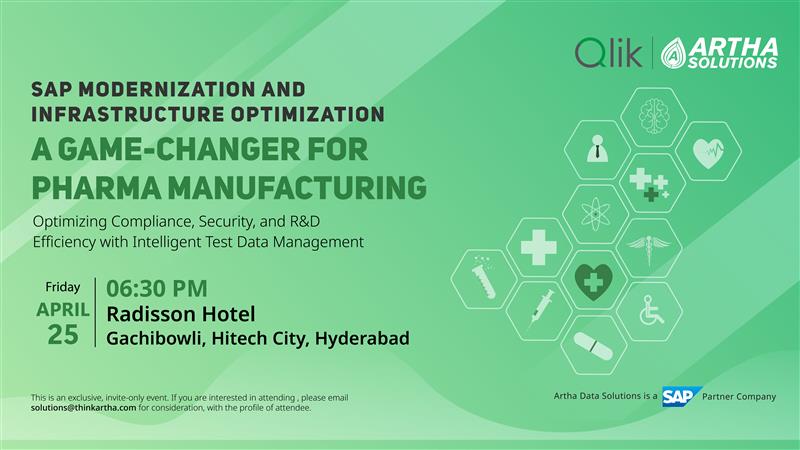
Modernizing Pharma ERP with Data & AI: The Strategic Imperative for CIOs

As a pharmaceutical manufacturing CIO, you’re not just managing IT systems—you’re enabling traceability, compliance, and operational excellence in one of the most regulated and complex industries in the world.

With SAP ECC approaching end-of-life by 2027 and the global regulatory landscape tightening its grip on serialization, digital batch traceability, and product integrity, modernizing your ERP landscape is no longer optional—it’s mission-critical. And it begins with two things: Data and AI.

Let’s explore how CIOs can modernize their SAP landscape with a data-first approach, unlocking real-world AI use cases while maintaining regulatory integrity across the supply chain.

The Current State: ECC Limitations in a Regulated, AI-Driven World

SAP ECC has been the backbone of pharma operations for over two decades. But its limitations are now showing:

  • Fragmented master data across plants and systems
  • Custom-coded batch traceability that’s difficult to validate
  • Limited support for real-time analytics or AI applications
  • Gaps in native compliance with emerging global serialization mandates

These challenges are amplified when CIOs begin implementing AI-driven process optimization or integrating with serialization solutions like SAP ATTP. ECC simply wasn’t built for today’s speed, scale, or compliance needs. We have seen how pressing it could be while dealing with Covid-19 pandemic.

Why S/4HANA Matters — But Only With Clean Data

SAP S/4HANA promises much: real-time batch monitoring, embedded analytics, streamlined quality management, and a foundation for intelligent supply chains. However, the true value of S/4HANA only emerges when the data behind it is trusted, governed, and AI-ready.

In pharma, that means:

  • GxP-aligned master data for materials, vendors, and BOMs
  • Audit-ready batch records that can withstand FDA or EMA scrutiny
  • Traceability of data lineage to support SAP ATTP and regulatory serialization audits

According to Gartner, over 85% of AI projects in enterprise environments fail due to poor data quality. In regulated pharma, that failure isn’t just technical—it’s regulatory risk.

Pharma’s Silent Risk Factor: Data Integrity

CIOs must recognize that data quality is not just a technical problem—it’s a compliance imperative.

ECC systems typically have:

  • 20%+ duplicated materials or vendors
  • Inconsistent inspection plans across manufacturing sites
  • Obsolete or unvalidated test definitions

These issues compromise everything from SAP ATTP serialization feeds to digital twins and AI-based demand forecasting.

Solution:

  • Establish Master Data Governance (MDG) with GxP alignment
  • Create a Data Integrity Index across key domains (Batch, BOM, Vendor)
  • Implement audit trails for all regulated master and transactional data


AI-Driven Requirement Gathering: Accelerate Without Compromising

One of the most overlooked areas in S/4HANA modernization is blueprinting and requirement gathering. In pharma, this phase is long, compliance-heavy, and often fragmented.

Now, CIOs are leveraging Generative AI to:

  • Analyze ECC transaction history to auto-generate process maps
  • Draft validation-ready requirement documents based on SAP best practices
  • Assist business users with smart conversational interfaces that document as-is and to-be states

This “AI-as-a-business-analyst” model is not just efficient—it helps standardize requirements and traceability, reducing the chance of non-compliant customizations.

SAP ATTP: Making Serialization a Core ERP Concern

Pharmaceutical CIOs are now expected to ensure end-to-end product traceability across the supply chain—from raw materials to patient delivery. SAP Advanced Track & Trace for Pharmaceuticals (ATTP) is purpose-built for this but depends heavily on ERP data being clean, structured, and integrated.

With the right foundation in S/4HANA and clean master data:

  • SAP ATTP can serialize every batch and unit pack reliably
  • AI models can predict risks in the supply chain (e.g., delayed shipments or counterfeit vulnerabilities)
  • Quality teams can track deviations or holds with full digital genealogy of the product

ATTP isn’t just an add-on—it’s a compliance engine. But it only works if your ERP core is modern and your data is trusted.

GenAI for Quick Wins: Where to Start

For CIOs looking to showcase quick ROI, consider deploying GenAI in areas that complement your ERP investment and are validation-friendly:

  • Digital SOP Assistants: AI bots that help QA teams find and summarize policies
  • Batch Record Summarization: GenAI reading batch logs to flag potential anomalies
  • Procurement Bots: Drafting vendor communication or PO summaries
  • Training Content Generation: Automated creation of process guides for new ERP workflows

These use cases are low-risk, business-enabling, and help build AI maturity across your teams.

The CIO Playbook: Data, Traceability, and AI Governance

As you modernize, consider this framework:

Pillar CIO Responsibility
Data Integrity Implement MDG, create Data Quality KPIs, enforce audit logs
AI Governance Define use-case ownership, ensure validation where needed
Compliance by Design Embed ALCOA principles into every ERP and AI workflow
Serialization Readiness Integrate S/4HANA and ATTP for end-to-end traceability

Final Thoughts: From ERP Modernization to Digital Pharma Leadership

Modernizing your ERP is not just about migrating systems—it’s about transforming your enterprise into a digitally intelligent, compliance-first, AI-augmented pharma organization.

CIOs must lead this transformation not from the data center—but from the boardroom. With the right data governance, a smart AI adoption roadmap, and strategic alignment with platforms like SAP ATTP, your ERP modernization journey will unlock more than efficiency—it will unlock trust, agility, and innovation.

Let data be your competitive advantage, and let compliance be your credibility.


Need help assessing your ERP data health or building your AI roadmap?

Let’s connect for a Data Integrity & AI Readiness Assessment tailored to pharma manufacturing.